From the Original Text
“Small pointed button-holed scallops provide delicate decoration without overwhelming the fabric. Work the points with very fine stitches placed extremely close together. The small scale requires great precision but produces charming effects suitable for the finest linens and delicate garments.”
— Thérèse de Dillmont, Encyclopedia of Needlework, 1886
Modern Step-by-Step Instructions
Small pointed button-holed scallops offer refined elegance through delicate scale and precise execution. These diminutive scallops create sophisticated trim that adds interest without overwhelming fine fabrics, making them perfect for subtle decoration and professional finishing.
What You’ll Need
- Fine fabric — Delicate weave cotton or linen for best proportion
- Fine thread — Thread weight appropriate to small scale work
- Fine needle — Size 10-12 for precision in small-scale work
- Precision scissors — Small, sharp embroidery scissors
- Small-scale template — Pattern sized for delicate scallops
- Fine marking tools — Precise marking for small details
- Good magnification — Helpful for seeing fine detail clearly
- Excellent lighting — Essential for precision work
- Advanced skills — Requires experience with buttonhole techniques
How to Work the Small Pointed Button-holed Scallops
- Create precise small-scale template for consistent tiny scallops.
- Mark very lightly—small scale shows any marking residue.
- Plan fine stitch placement—small points need extremely close stitches.
- Work with finest stitches at the center point.
- Maintain point sharpness through very close stitch spacing.
- Transition smoothly to slightly wider spacing on curves.
- Keep overall scale delicate—small scallops should remain subtle.
- Complete all scallops before cutting for uniformity.
- Cut with extreme care—small scale magnifies cutting errors.
Expert Tips for the Perfect Small Pointed Button-holed Scallops
- Work in excellent light with magnification if needed for fine detail
- Use the finest possible stitches—small scale requires proportional delicacy
- Keep scallops uniformly small—variation will be immediately noticeable
- Plan stitch count carefully to maintain consistent point sharpness
- Use thread weight proportional to scallop size—avoid overwhelming the scale
- Mark very lightly as small scallops show any marking residue
- Practice extensively on scraps to perfect the fine motor control needed
- Consider small pointed scallops for areas where large ones would be inappropriate
Traditional Uses
Small pointed button-holed scallops provided refined decoration for delicate applications:
- Children’s clothing — Appropriate scale decoration for small garments
- Lingerie trim — Delicate finishing for undergarments
- Handkerchief edges — Refined decoration for personal accessories
- Collar details — Subtle ornamentation on garment elements
- Baby linens — Gentle decoration appropriate to infant items
- Pocket squares — Masculine accessories requiring restrained decoration
- Fine embroidery borders — Completing delicate needlework pieces
Historical Note
Small pointed button-holed scallops demonstrated the Victorian needleworker’s understanding that scale and proportion were essential elements of good design. De Dillmont’s observation that they “provide delicate decoration without overwhelming the fabric” reflected sophisticated aesthetic judgment—knowing when restraint was more elegant than elaboration. The technique required exceptional fine motor control and visual acuity, as the small scale magnified any irregularities. These tiny scallops represented refined taste and technical mastery, showing that the needleworker could work with precision at any scale. Their presence indicated work of the highest quality, where every detail was considered and perfectly executed.
Recommended Supplies
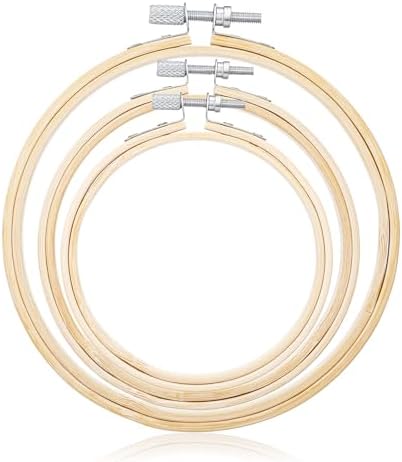


As an Amazon Associate, we earn from qualifying purchases.
Own the Complete Encyclopedia
The Encyclopedia of Needlework contains over 800 pages of stitches, patterns, and techniques.
Get your own hardcover reprint of this 1886 masterpiece.