From the Original Text
“Round button-holed scallops. Mark out the scallops with a template or pattern, then work button-hole stitch closely around the curved edge. The stitches should be perpendicular to the curve and completely cover the raw edge. Cut away the excess fabric carefully after the button-holing is complete.”
— Thérèse de Dillmont, Encyclopedia of Needlework, 1886
Modern Step-by-Step Instructions
Round button-holed scallops create elegant curved edges that transform plain fabric into sophisticated trim. This advanced technique requires careful planning, steady hands, and patience to achieve the smooth curves that characterize professional-quality scalloped edges.
What You’ll Need
- Fine fabric — Closely woven cotton or linen for best results
- Quality thread — Thread that matches fabric or provides desired contrast
- Sharp needle — Size 9-10 for precise work
- Embroidery scissors — Small, sharp scissors for accurate cutting
- Scallop template — Pattern or template for marking consistent curves
- Marking tools — Water-soluble markers for temporary guidelines
- Advanced skills — Requires mastery of basic buttonhole stitch
- Patience — This is slow, meticulous work
How to Work the Round Button-holed Scallops
- Create template for consistent scallop size and spacing.
- Mark scallops lightly on fabric using template and marking tools.
- Plan your route—work from right to left for best control.
- Begin buttonhole stitch at the base of first scallop.
- Work around curve keeping stitches perpendicular to edge.
- Adjust stitch spacing to maintain smooth curve appearance.
- Complete all scallops before cutting away excess fabric.
- Trim carefully close to buttonhole edge, avoiding cutting stitches.
Expert Tips for the Perfect Round Button-holed Scallops
- Make a cardboard template for perfectly consistent scallop shapes
- Work stitches closer together on tight curves to maintain smooth appearance
- Keep the looped edge of buttonhole stitch toward the cut edge
- Use shorter stitches on curves and longer ones on straight sections
- Don’t cut the fabric until all buttonhole stitching is complete
- Cut very carefully with small scissors, trimming close but not into stitches
- Practice on scraps first to perfect your curve technique
- Mark scallops with water-soluble ink that disappears completely
Traditional Uses
Round button-holed scallops were the hallmark of fine Victorian needlework:
- Table linens — Elegant finishing for tablecloths and napkins
- Pillow cases — Decorative edges for bedroom linens
- Handkerchiefs — Sophisticated finishing for personal accessories
- Children’s clothing — Pretty details on collars and cuffs
- Ladies’ undergarments — Delicate trim on chemises and petticoats
- Altar linens — High-quality finishing for religious textiles
- Gift items — Special touches for presentations and keepsakes
Historical Note
Round button-holed scallops represented the pinnacle of Victorian edge finishing, requiring both technical mastery and artistic sensibility. The technique demanded perfect planning—scallops had to be evenly spaced and identically shaped—and flawless execution, as mistakes were nearly impossible to correct. De Dillmont’s instruction to cut fabric “carefully after the button-holing is complete” emphasized the technique’s unforgiving nature. Scalloped edges marked the difference between everyday household linens and special occasion pieces, and their presence indicated that an item was worthy of display and treasured use. The smooth curves achieved through skillful spacing of perpendicular stitches demonstrated the needleworker’s complete mastery of her craft.
Recommended Supplies
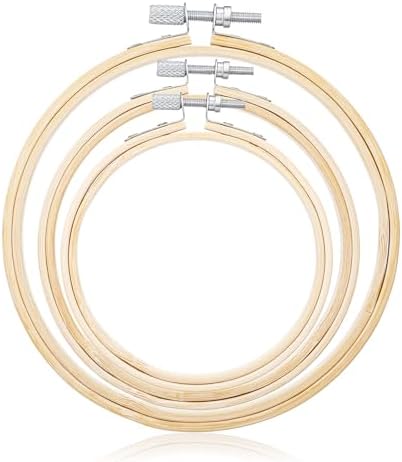


As an Amazon Associate, we earn from qualifying purchases.
Own the Complete Encyclopedia
The Encyclopedia of Needlework contains over 800 pages of stitches, patterns, and techniques.
Get your own hardcover reprint of this 1886 masterpiece.