From the Original Text
“Large pointed button-holed scallops require the greatest precision in marking and execution. The points must be perfectly sharp and the curves symmetrical. Work from the center point outward, keeping stitches closest at the point and gradually increasing spacing toward the curves. This creates the most dramatic and elegant finish for fine linens.”
— Thérèse de Dillmont, Encyclopedia of Needlework, 1886
Modern Step-by-Step Instructions
Large pointed button-holed scallops create the most dramatic and sophisticated edge treatment in needlework. The sharp points and flowing curves require master-level planning and execution, producing architectural effects that transform simple fabric into prestigious textile art.
What You’ll Need
- Premium fabric — Finest quality linen or cotton for best results
- Finest thread — High-quality thread in matching or contrasting color
- Precision needle — Size 10-11 for extremely fine work
- Professional scissors — Finest embroidery scissors for perfect cutting
- Precise template — Perfectly crafted pattern for large scallops
- Professional marking tools — Accurate, removable marking system
- Master-level skills — Requires extensive experience with scalloping
- Exceptional patience — This is the most demanding edge technique
How to Work the Large Pointed Button-holed Scallops
- Create perfect template with sharp points and flowing curves.
- Mark with absolute precision—any irregularity will show dramatically.
- Plan stitch distribution—points need closest stitches, curves need spacing.
- Begin at point center with finest possible stitches.
- Work outward symmetrically maintaining perfect point sharpness.
- Transition to curves gradually increasing stitch spacing.
- Maintain curve smoothness through careful stitch placement.
- Complete all scallops before any cutting to ensure perfection.
- Cut with extreme precision—large scallops magnify any errors.
Expert Tips for the Perfect Large Pointed Button-holed Scallops
- This is master-level work—ensure extensive experience before attempting
- Create templates from rigid materials for perfect consistency
- Plan point angles carefully—too sharp will weaken, too broad loses drama
- Work stitches extremely close at points to prevent fabric splitting
- Use graduated spacing from point to curve for natural flow
- Mark with finest possible lines using highest quality tools
- Practice extensively on samples before working on final pieces
- Consider this the pinnacle achievement in edge finishing techniques
Traditional Uses
Large pointed button-holed scallops were reserved for the most prestigious applications:
- Presentation pieces — Items intended as gifts for important occasions
- Wedding trousseau — Special linens for the most important celebrations
- Exhibition work — Pieces demonstrating supreme needlework mastery
- Ceremonial textiles — High-status items for formal occasions
- Royal commissions — Work for the highest levels of society
- Competition entries — Showcasing the pinnacle of technical achievement
- Museum-quality pieces — Items preserved as examples of supreme craftsmanship
Historical Note
Large pointed button-holed scallops represented the absolute summit of Victorian needlework achievement. De Dillmont’s emphasis on “the greatest precision in marking and execution” acknowledged that this technique separated true masters from accomplished amateurs. The dramatic scale magnified every aspect of the work—perfect planning, flawless execution, and precise finishing were all essential, as any flaw would be immediately visible. These scallops required not only supreme technical skill but also artistic judgment in proportions and spacing. Their presence on a textile marked it as the work of a master needleworker, worthy of preservation and display for generations. This technique represented needlework as high art—functional craft elevated to the level of architectural achievement.
Recommended Supplies
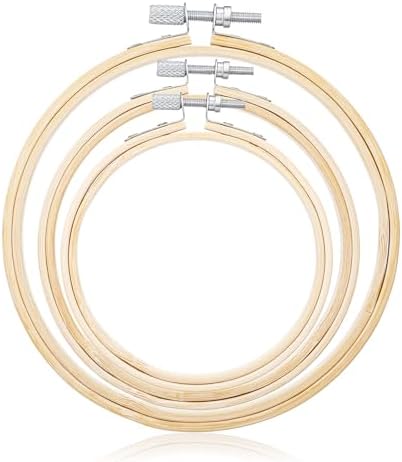


As an Amazon Associate, we earn from qualifying purchases.
Own the Complete Encyclopedia
The Encyclopedia of Needlework contains over 800 pages of stitches, patterns, and techniques.
Get your own hardcover reprint of this 1886 masterpiece.