From the Original Text
“To work hold the working thread down with the thumb close to the spot where you first brought it out, twist it twice round the needle, turn the needle round from left to right, following the direction indicated by the arrow, pass it through the fabric at the place which is marked by a dot, and draw it out at the place where the next stitch is to be.”
— Thérèse de Dillmont, Encyclopedia of Needlework, 1886
Modern Step-by-Step Instructions
The twisted knot stitch, commonly known today as the French knot, is one of the most versatile decorative stitches in embroidery. Despite its small size, it creates beautiful texture and dimension when used for flower centers, eyes, dotted patterns, or filling entire areas with a stippled effect.
What You’ll Need
- Embroidery hoop — Essential for maintaining fabric tension
- Embroidery needle — Size 7-9 crewel needle works best
- Embroidery floss — 2-3 strands for standard knots
- Fabric — Medium-weave cotton or linen recommended for beginners
How to Work the Twisted Knot Stitch (French Knot)
- Bring your needle up through the fabric at the point where you want the knot to sit.
- Hold the thread taut with your non-dominant hand, about 3 inches from where it exits the fabric.
- Wrap the thread around the needle twice (or once for smaller knots, three times for larger). Wrap away from yourself, keeping the wraps snug but not tight.
- Insert the needle back down very close to (but not in) the original hole. The key is inserting it 1-2 fabric threads away.
- Hold the wraps in place with your thumb as you slowly pull the needle and thread through to the back.
- Pull gently but firmly until the knot sits snugly on the fabric surface.
Expert Tips for the Perfect Twisted Knot Stitch (French Knot)
- Always use an embroidery hoop — loose fabric is the #1 cause of messy knots
- Pull slowly and evenly; yanking creates loose, sloppy knots
- If your knots keep pulling through, insert the needle slightly further from your starting point
- For consistent knot size, always wrap the same number of times
- Use a milliner’s (straw) needle for easier wrapping — the uniform shaft lets wraps slide off smoothly
Traditional Uses
French knots are incredibly versatile. Traditional applications include:
- Flower centers (especially roses, daisies, and forget-me-nots)
- Animal eyes and noses
- Dotted borders and outlines
- Filling large areas with textured “seed” effects
- Creating dimension in whitework and monograms
- Representing berries, grapes, and small fruits
Historical Note
Despite the name, the French knot likely originated in the Middle East and came to Europe through trade routes. The technique appears in embroideries from China, India, and Persia dating back centuries before it became popular in France. Thérèse de Dillmont, author of the Encyclopedia of Needlework, referred to it as “twisted knot stitch” — a more descriptive name that fell out of common use by the early 20th century.
Recommended Supplies
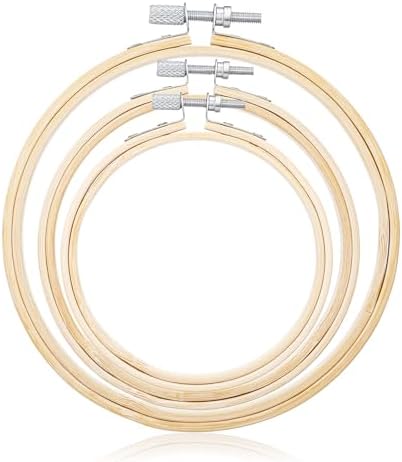


As an Amazon Associate, we earn from qualifying purchases.
Own the Complete Encyclopedia
The Encyclopedia of Needlework contains over 800 pages of stitches, patterns, and techniques.
Get your own hardcover reprint of this 1886 masterpiece.