From the Original Text
“Chain stitch. Bring out the thread, insert the needle again into the same hole and bring it out again at a short distance, but so that the thread lies underneath the needle, in the form of a loop. Draw the needle out and insert it again into the hole from which it last came out.”
— Thérèse de Dillmont, Encyclopedia of Needlework, 1886
Modern Step-by-Step Instructions
Chain stitch creates a flowing line of connected loops that resembles a chain. This versatile technique is perfect for outlining shapes, creating flowing decorative lines, and filling areas with texture. It’s one of the most fundamental and useful embroidery stitches.
What You’ll Need
- Embroidery fabric — Any weight; medium-weave cotton recommended
- Embroidery floss — 2-3 strands for most applications
- Embroidery needle — Size 7-9 crewel needle
- Embroidery hoop — Essential for maintaining fabric tension
- Transfer materials — For marking design lines
- Good lighting — Important for maintaining consistent loop formation
How to Work the Chain Stitch
- Bring thread up at the starting point of your line.
- Insert needle back down in the exact same hole where thread emerged.
- Bring needle up a short distance forward along your design line.
- Loop thread under needle before pulling needle through—this forms the chain loop.
- Pull thread gently to form a neat loop on the fabric surface.
- Insert needle into the hole where it just emerged (completing the loop).
- Continue the same process to create a chain of connected loops.
Expert Tips for the Perfect Chain Stitch
- Keep loops uniform in size by maintaining consistent spacing between entry and exit points
- Don’t pull thread too tight—chains should lie smoothly on the fabric surface
- For curves, make shorter stitches to follow the line naturally
- Practice loop formation until the motion becomes automatic
- Start with straight lines before attempting curves or filling areas
- Use varying thread weights to create different chain thicknesses
- End chains with a tiny securing stitch to prevent the last loop from pulling out
Traditional Uses
Chain stitch has been used across cultures for centuries in many applications:
- Outlining designs — Creating bold, flowing boundaries around shapes
- Filling areas — Working in rows to fill large spaces with texture
- Monograms and lettering — Creating decorative script and text
- Border work — Flowing decorative edges on linens and garments
- Crewel embroidery — Essential stitch in traditional English wool embroidery
- Indian chikankari — Classic white-on-white shadow work embroidery
- Chinese embroidery — Traditional silk embroidery techniques
Historical Note
Chain stitch is one of the oldest embroidery techniques, found in textiles from ancient China, India, and Persia dating back over 2,000 years. The technique’s simplicity and versatility made it universal—appearing independently in cultures worldwide. De Dillmont’s instruction to loop “the thread underneath the needle” emphasized the fundamental motion that creates the chain effect. In Victorian embroidery, chain stitch was prized for its flowing, organic quality that suited the era’s love of naturalistic botanical designs and decorative flourishes.
Recommended Supplies
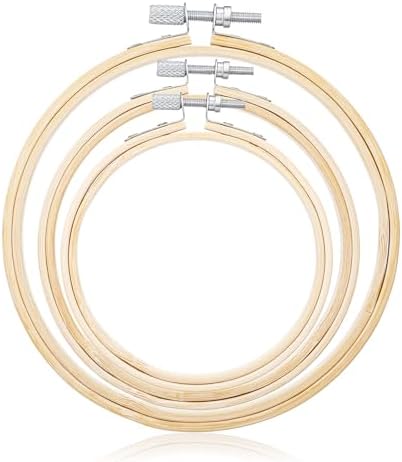


As an Amazon Associate, we earn from qualifying purchases.
Own the Complete Encyclopedia
The Encyclopedia of Needlework contains over 800 pages of stitches, patterns, and techniques.
Get your own hardcover reprint of this 1886 masterpiece.