From the Original Text
“Back-stitching, properly so called. This is executed like running-stitch, but instead of leaving a space between the stitches, the needle is put back into the same hole out of which the thread came for the last stitch. The result on the right side is a continuous line of stitches.”
— Thérèse de Dillmont, Encyclopedia of Needlework, 1886
Modern Step-by-Step Instructions
Back-stitching creates strong, continuous lines that resemble machine stitching when done well. This fundamental technique produces solid outlines perfect for lettering, detailed drawings, and anywhere a bold, unbroken line is needed in embroidery work.
What You’ll Need
- Embroidery fabric — Any weight; medium-weave cotton recommended
- Embroidery floss — 2-3 strands for most applications
- Sharp needle — Size 7-9 embroidery needle
- Embroidery hoop — Essential for maintaining tension
- Transfer materials — For marking lines accurately
- Good lighting — Important for precise needle placement
How to Work the Back-stitching
- Mark your line clearly on the fabric.
- Bring needle up at the beginning of your line.
- Insert needle forward about 1/8 inch along the line.
- Bring needle up 1/8 inch forward from insertion point (1/4 inch from start).
- Insert needle back into the exact hole where your first stitch ended.
- Continue this pattern—always going back to meet the previous stitch.
- Keep stitches uniform in length for professional appearance.
Expert Tips for the Perfect Back-stitching
- The key is always going back to the exact endpoint of your previous stitch
- Maintain consistent stitch length for a machine-like appearance
- Use shorter stitches for curves, longer for straight lines
- Pull thread snugly but not tightly to avoid puckering the fabric
- For fine detail work, use only 1-2 strands of floss
- Practice maintaining even spacing between needle insertions
- This creates the strongest embroidered line—ideal for structural elements
Traditional Uses
Back-stitching was the go-to technique whenever strong, continuous lines were needed:
- Lettering and monograms — Clear, bold text elements
- Outline embroidery — Defining shapes and boundaries
- Detailed drawings — Fine line work in pictorial embroidery
- Geometric patterns — Precise lines in formal designs
- Redwork embroidery — Traditional single-color outline work
- Transfer work — Following printed or traced designs
- Structural lines — Elements requiring visual strength and definition
Historical Note
Back-stitching represented the embroiderer’s version of machine precision in an era when hand needlework was still dominant. De Dillmont’s description emphasizing the “continuous line of stitches” highlighted the technique’s mechanical appearance—a quality valued in an age increasingly fascinated with industrial efficiency. The method’s strength and permanence made it essential for practical applications like marking household linens, while its clean appearance suited the Victorian preference for neat, precise decorative work. This was truly the workhorse stitch of 19th-century embroidery.
Recommended Supplies
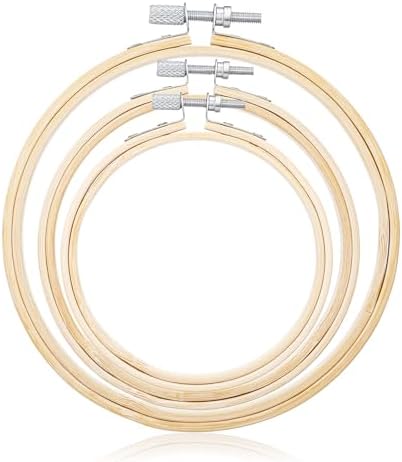


As an Amazon Associate, we earn from qualifying purchases.
Own the Complete Encyclopedia
The Encyclopedia of Needlework contains over 800 pages of stitches, patterns, and techniques.
Get your own hardcover reprint of this 1886 masterpiece.