From the Original Text
“Gobelin stitch consists of straight vertical stitches worked over several canvas threads, creating smooth, even coverage that resembles woven tapestry. The stitch derives its name from the famous Gobelin tapestry workshops and provides an economical way to achieve tapestry-like effects in needlework.”
— Thérèse de Dillmont, Encyclopedia of Needlework, 1886
Modern Step-by-Step Instructions
Gobelin stitch creates smooth, vertical coverage that closely mimics woven tapestry, making it ideal for realistic pictorial work and large background areas. This straight stitch technique offers excellent thread economy while producing professional-looking results. The key lies in maintaining consistent stitch length and even tension to achieve the characteristic smooth, woven appearance.
What You’ll Need
- Canvas — Mono or interlock canvas in appropriate gauge
- Tapestry wool or thread — Weight suitable for canvas gauge
- Tapestry needles — Blunt needles that slide smoothly through canvas
- Canvas frame — Essential for maintaining proper tension
- Good lighting — For accurate stitch placement and color work
- Pattern guide — Chart showing stitch direction and color placement
How to Work the Gobelin Stitch
- Mount canvas securely in frame to prevent distortion.
- Bring needle up at the bottom of the first stitch position.
- Insert needle down 2-4 canvas threads directly above the starting point.
- Work consistently in straight vertical lines across the canvas.
- Maintain even tension so stitches lie flat and parallel.
- Keep stitches uniform in height throughout the work area.
- Work systematically row by row for best coverage.
- Secure thread ends by weaving through completed work on the back.
Expert Tips for the Perfect Gobelin Stitch
- Use a frame to maintain consistent canvas tension throughout the work
- Keep stitch height uniform—typically 2-4 canvas threads depending on the design
- Work with appropriate thread coverage for smooth, gap-free results
- Plan color changes carefully to maintain the tapestry-like effect
- Use shorter thread lengths (12-15 inches) to prevent excessive wear
- Work systematically to avoid leaving gaps between stitched areas
- Consider the viewing direction when planning stitch orientation
- Block finished work to ensure proper dimensions and shape
Traditional Uses
Gobelin stitch provided tapestry-like effects for various decorative and functional purposes:
- Picture work — Realistic landscapes and portraits with smooth color areas
- Chair seats — Furniture upholstery requiring durable, attractive coverage
- Fire screens — Decorative panels with pictorial or geometric designs
- Wall hangings — Decorative pieces mimicking expensive woven tapestries
- Cushion covers — Household furnishings with elegant, woven appearance
- Book covers — Protective covers with sophisticated decorative effects
- Bell pulls — Functional items requiring smooth, strong surfaces
Historical Note
Gobelin stitch takes its name from the renowned Gobelin tapestry manufactory established in Paris in the 17th century, which became synonymous with the highest quality woven tapestries. The needlework stitch was developed to imitate the smooth, vertical threads of woven tapestry at a fraction of the cost and time investment. During the Victorian era, this technique allowed middle-class needleworkers to create sophisticated decorative effects that rivaled expensive woven tapestries. De Dillmont’s documentation recognized Gobelin stitch as a legitimate artistic technique in its own right, not merely an imitation of weaving. The stitch demonstrated how needlework could democratize luxury effects, making sophisticated decorative arts accessible to a broader audience through skillful technique rather than expensive materials.
Recommended Supplies
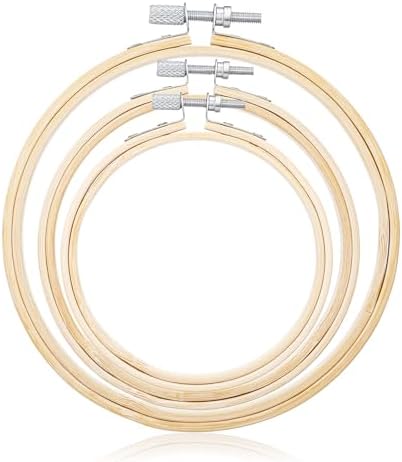


As an Amazon Associate, we earn from qualifying purchases.
Own the Complete Encyclopedia
The Encyclopedia of Needlework contains over 800 pages of stitches, patterns, and techniques.
Get your own hardcover reprint of this 1886 masterpiece.