From the Original Text
“Rounded rose scallops are made by closely button-holing the rounded edge, then cutting away the fabric beneath to create flowing curves reminiscent of rose petals. The beauty lies in the gentle undulations that create a more natural, organic edge than geometric scallops.”
— Thérèse de Dillmont, Encyclopedia of Needlework, 1886
Modern Step-by-Step Instructions
Rounded rose scallops create beautifully organic edges that mimic the flowing curves of flower petals. Unlike geometric scallops with precise points, these feature gentle undulations that add a romantic, natural feeling to any project. The technique requires careful planning to achieve smooth curves and consistent proportions throughout the edge.
What You’ll Need
- Embroidery floss or buttonhole twist — Medium weight for clean coverage
- Sharp embroidery scissors — Essential for precise cutting of curves
- Template or pattern — For consistent scallop shapes
- Fabric marking tool — Water-soluble pen or light pencil
- Fine needle — Size 8-10 for smooth buttonhole stitches
- Embroidery hoop — To maintain fabric tension during stitching
How to Work the Rounded Rose Scallops
- Create flowing template with gentle curves reminiscent of rose petals.
- Mark scallop outlines lightly on fabric, ensuring smooth transitions.
- Plan stitch spacing—closer stitches on inner curves, slightly wider on outer curves.
- Begin buttonhole stitching with consistent tension and spacing.
- Follow the organic curves carefully, adjusting stitch angle for smooth flow.
- Maintain consistent depth of buttonhole stitches throughout.
- Pay special attention to transition areas between scallops.
- Complete all stitching before cutting any fabric away.
- Cut carefully following the natural curve, leaving no jagged edges.
Expert Tips for the Perfect Rounded Rose Scallops
- Study real rose petals for inspiration on natural curve variations
- Use consistent buttonhole stitch depth—uneven depth ruins the flowing effect
- Plan the entire edge before starting to ensure pleasing overall composition
- Work in good light to maintain even stitch tension throughout
- Test your template on scrap fabric first to perfect the curves
- Keep curves gentle—overly dramatic undulations look unnatural
- Consider the fabric weight when planning scallop size
- Practice smooth cutting technique on scraps before working on your project
Traditional Uses
Rounded rose scallops brought organic beauty to Victorian needlework:
- Evening gown hems — Romantic finishing for formal wear
- Shawl edges — Flowing decoration for delicate accessories
- Curtain valances — Softening window treatments with natural curves
- Tablecloth borders — Adding elegance to dining linens
- Bed linens — Romantic touches on pillowcases and sheets
- Christening gowns — Delicate decoration for special occasion garments
- Handkerchief edges — Feminine finishing for personal accessories
Historical Note
Rounded rose scallops reflected the Victorian era’s fascination with nature and the language of flowers. The rose, symbol of love and beauty, influenced decorative arts throughout the 19th century. These scallops allowed needleworkers to incorporate natural, organic shapes into their work—a departure from purely geometric patterns. De Dillmont’s inclusion of this technique showed how embroidery could capture the essence of living forms. The flowing curves required both technical skill and artistic sensibility, as the maker had to balance consistency with natural variation. These scallops represented the Romantic movement’s influence on decorative arts, where emotion and nature took precedence over strict classical forms.
Recommended Supplies
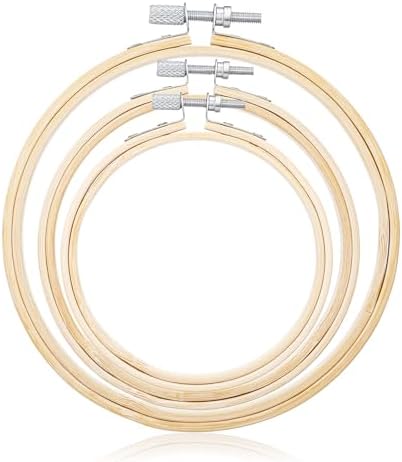


As an Amazon Associate, we earn from qualifying purchases.
Own the Complete Encyclopedia
The Encyclopedia of Needlework contains over 800 pages of stitches, patterns, and techniques.
Get your own hardcover reprint of this 1886 masterpiece.