From the Original Text
“To make an eyelet-hole, pierce the material with a stiletto, or cut it with very sharp scissors. Overcast it closely all round, taking the stitches over the cut edges, working them into each other, so that no hole is visible between the stitches.”
— Thérèse de Dillmont, Encyclopedia of Needlework, 1886
Modern Step-by-Step Instructions
Overcast eyelet holes are the foundation of all eyelet embroidery—simple, clean holes finished with smooth overcasting stitches. Unlike buttonhole eyelets with their raised corded edge, these create flat, smooth-rimmed holes perfect for both functional and decorative purposes. The key is creating perfectly round holes with consistently spaced overcasting that completely covers the raw edges.
What You’ll Need
- Stiletto or awl — For piercing round holes cleanly
- Sharp embroidery scissors — For cutting holes if needed
- Embroidery floss — Single strand for fine work, 2-3 strands for standard holes
- Fine embroidery needle — Size 9-11 for smooth overcasting
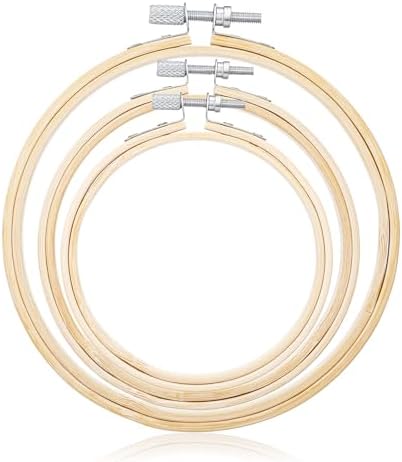
- Embroidery hoop — Essential for maintaining fabric tension
- Template or compass — For marking consistent hole sizes
How to Work the Overcast Eyelet Holes
- Mark hole positions lightly with a template or compass for consistency.
- Pierce the hole with a stiletto, twisting to create a clean round opening.
- Alternatively, cut carefully with sharp scissors for larger holes.
- Bring needle up just outside the hole edge.
- Work overcast stitches closely around the hole, covering all raw edges.
- Keep stitches consistent in spacing and tension for smooth edges.
- Work stitches into each other so no fabric shows between them.
- Complete the circle and secure thread on the back.
Expert Tips for the Perfect Overcast Eyelet Holes
- Use a stiletto for the cleanest holes—cutting can leave irregular edges
- Work with fabric in a hoop to prevent distortion while stitching
- Keep overcasting stitches at consistent angle for uniform appearance
- Don’t pull too tightly—this can pucker the surrounding fabric
- Practice on scraps to perfect your stitch spacing before starting your project
- For very small holes, use single strand of floss for delicate appearance
- Mark holes temporarily with removable marker for accurate placement
- Work all holes to completion before starting any connecting elements
Traditional Uses
Overcast eyelet holes served both practical and decorative purposes in Victorian needlework:
- Corset lacing — Functional holes for garment closures
- Broderie anglaise — Foundation technique for English eyelet embroidery
- Christening gown details — Delicate decoration for special garments
- Undergarment trim — Decorative finishing for lingerie
- Collar and cuff accents — Subtle decoration on garment details
- Household linen borders — Simple embellishment for practical items
- Children’s clothing — Easy-to-wash decorative technique
- Handkerchief corners — Traditional finishing for personal accessories
Historical Note
Overcast eyelet holes represented the intersection of utility and beauty in Victorian needlework. While their roots lay in purely functional applications—lacing garments and creating ventilation in heavy fabrics—they evolved into sophisticated decorative elements. The technique’s simplicity made it accessible to needleworkers at all skill levels, yet masters could create extraordinary effects through careful planning and execution. De Dillmont’s emphasis on making stitches “work into each other, so that no hole is visible between” reflected the Victorian pursuit of technical perfection. These humble eyelets became the foundation for elaborate broderie anglaise and Madeira work, proving that even the simplest techniques could achieve remarkable beauty in skilled hands.
Recommended Supplies


As an Amazon Associate, we earn from qualifying purchases.
Own the Complete Encyclopedia
The Encyclopedia of Needlework contains over 800 pages of stitches, patterns, and techniques.
Get your own hardcover reprint of this 1886 masterpiece.