From the Original Text
“Pointed rose scallops combine the flowing curves of the rose petal with sharp points that add architectural interest. The contrast between soft curves and crisp points creates a sophisticated edge that is both natural and refined.”
— Thérèse de Dillmont, Encyclopedia of Needlework, 1886
Modern Step-by-Step Instructions
Pointed rose scallops offer the best of both worlds—the organic beauty of flowing curves combined with the structural elegance of sharp points. This technique requires mastery of both smooth curve execution and precise point formation, making it one of the most sophisticated scallop variations. The interplay between soft and sharp elements creates visual interest and architectural detail.
What You’ll Need
- Embroidery floss or buttonhole twist — Consistent thread for clean lines
- Sharp embroidery scissors — Critical for precise point cutting
- Detailed template — Showing both curves and point placement
- Fine marking tool — For accurate curve and point marking
- Quality needle — Size 8-10 for smooth stitching
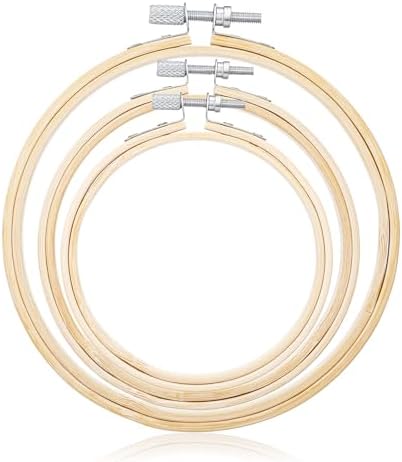
- Embroidery hoop — Essential for maintaining tension during detailed work
How to Work the Pointed Rose Scallops
- Design balanced template with harmonious curve-to-point proportions.
- Mark both elements carefully—curves and points must work together.
- Plan stitch transitions from flowing curves to concentrated points.
- Begin with curves using smooth, consistent buttonhole stitching.
- Approach points gradually with increasingly close stitch spacing.
- Create sharp points with extremely tight stitch concentration.
- Transition back to curves with gradually widening stitches.
- Maintain consistent quality throughout both curved and pointed sections.
- Cut with precision to preserve both curve smoothness and point sharpness.
Expert Tips for the Perfect Pointed Rose Scallops
- Balance curve flow with point precision—neither should dominate
- Use consistent thread tension to maintain clean transitions
- Practice the curve-to-point transition extensively before starting
- Plan point placement for visual rhythm across the entire edge
- Work in excellent light to maintain precision throughout
- Keep points uniformly sharp while maintaining natural curve flow
- Test proportions on scraps to achieve pleasing balance
- Consider the overall design context when planning scallop size
Traditional Uses
Pointed rose scallops provided sophisticated decoration for prestigious projects:
- Wedding trousseau items — Combining romance with architectural elegance
- Formal dining linens — Adding refinement to special occasion pieces
- Presentation garments — For items requiring impressive finishing
- Church vestments — Sacred textiles demanding both beauty and dignity
- Exhibition pieces — Demonstrating advanced technical and design skills
- Gift items — Special presents requiring extraordinary finishing
- Heirloom projects — Items intended to be treasured across generations
Historical Note
Pointed rose scallops represented the Victorian aesthetic principle of “unity in variety”—creating visual interest through contrast while maintaining overall harmony. This technique demonstrated the needleworker’s ability to balance opposing design elements: organic and geometric, flowing and structured, soft and sharp. Such sophistication in decorative edges reflected the era’s belief that every detail should contribute to the overall artistic effect. The combination of natural rose curves with architectural points showed how Victorian designers drew inspiration from both nature and classical architecture, creating uniquely 19th-century interpretations of beauty that were neither purely naturalistic nor strictly geometric.
Recommended Supplies


As an Amazon Associate, we earn from qualifying purchases.
Own the Complete Encyclopedia
The Encyclopedia of Needlework contains over 800 pages of stitches, patterns, and techniques.
Get your own hardcover reprint of this 1886 masterpiece.